Anti Aging Foods: The Essential Nutrients for Lasting Youthfulness
Can what we eat really affect how we age? As we age, our bodies change in ways that can impact our health and looks. The key is understanding how our diet affects aging.
Some nutrients are vital for staying healthy as we get older. Essential nutrients help keep us young and lower the risk of age-related diseases. So, what are these key components that make some foods great for our health?
Eating a balanced diet full of these nutrients helps us age healthily. This boosts our well-being and supports our body’s natural functions.
Key Takeaways
- Incorporating essential nutrients into your diet can support healthy aging.
- A balanced diet plays a critical role in keeping us youthful.
- Certain foods can help lower the risk of age-related diseases.
- Focusing on nutrient-rich foods is key to a proactive approach to aging.
- A healthy diet enhances overall well-being and supports natural bodily processes.
Understanding How Anti Aging Foods Combat Cellular Damage
Many of us seek to stay young by looking into anti-aging foods. As we get older, our cells start to break down. Knowing how this happens helps us use anti-aging foods better.
The Role of Free Radicals in Aging
Free radicals are unstable molecules that harm our cells. They cause signs of aging like wrinkles and age spots. Antioxidant-rich foods can fight these radicals and slow aging.
How Antioxidants Protect Your Cells
Antioxidants are key in protecting our cells from free radicals. Eating foods high in antioxidants, like vitamins C and E, boosts our cell defense. This keeps us looking and feeling young.
The Connection Between Inflammation and Aging
Chronic inflammation speeds up aging. Some foods have anti-inflammatory effects. Knowing this helps us choose foods that support healthy aging.
To fight cellular damage, we need to eat a variety of anti-aging foods. These foods give us important nutrients and help our body fight aging.
Top 10 Anti Aging Foods to Include in Your Daily Diet
To fight aging, eating foods rich in antioxidants and nutrients is key. A diet with the right foods can protect your cells, reduce inflammation, and boost health. Here, we’ll look at the top anti-aging foods for a youthful look every day.
Berries: Nature’s Antioxidant Powerhouses
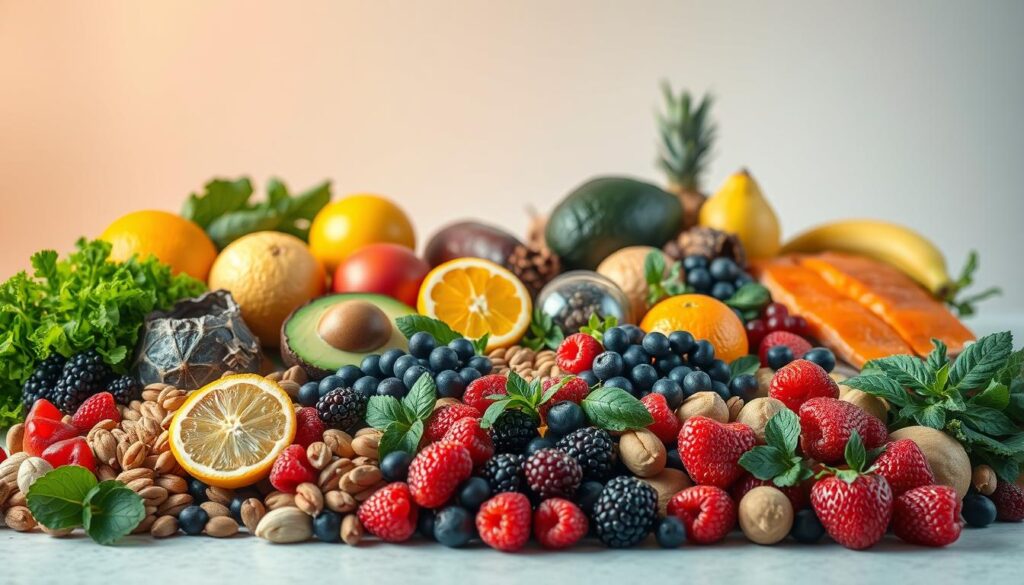
Berries like blueberries, strawberries, and raspberries are full of antioxidants. These help fight free radicals, which harm cells and speed up aging. Eating berries regularly can make your skin look better and hide signs of aging.
Fatty Fish: Essential Omega-3 Sources
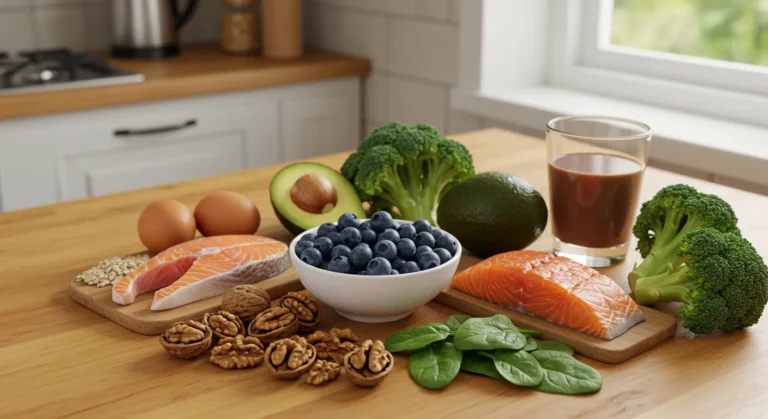
Fatty fish like salmon, sardines, and mackerel are packed with omega-3s. These fats are great for keeping skin flexible and reducing inflammation. Omega-3s also keep your heart healthy, which is important for overall well-being.
Leafy Greens: Vitamin K and Folate Champions
Leafy greens like spinach, kale, and collard greens are full of vitamins K and folate. These nutrients are key for healthy skin and preventing age-related diseases. Vitamin K helps with blood clotting, and folate supports cell growth and DNA repair.
Nuts and Seeds: Healthy Fats for Skin Elasticity
Nuts and seeds, like almonds, walnuts, and chia seeds, are rich in healthy fats. They’re good for skin health with their essential fatty acids and antioxidants. Eating a variety of nuts and seeds can make your skin more elastic and improve your health.
Conclusion: Creating Your Anti-Aging Nutrition Plan
We’ve looked at key nutrients and foods that fight cellular damage and keep us young. Adding anti-aging foods to your diet helps you look and feel younger.
To make your own anti-aging plan, eat a variety of whole foods. Think berries, fatty fish, leafy greens, and nuts and seeds. These foods are full of what your body needs for health and energy.
Eating well and staying active can really slow down aging. Choosing the right foods is a big step towards better health and looking younger. Start your anti-aging diet today and see how it changes you.
Disclaimer: The information provided is for educational purposes only, not a substitute for professional medical advice. Always consult a healthcare professional.