The Biggest Myth About Afternoon Energy Boost
Ever hit an absolute wall around 3:00 PM? Most people blame their lunch. The pasta, the sandwich, the infamous “food coma.”
But what if we told you that your afternoon crash has almost nothing to do with what’s on your plate? You could eat a plain kale salad and still feel like a zombie by mid-afternoon.
Today, we’re breaking down why your low energy after lunch is actually hardwired into your biology—and more importantly, we’re giving you three science-backed habits to “reboot” your brain in less than ten minutes.
The Dead Zone (And You Know Exactly What We’re Talking About)
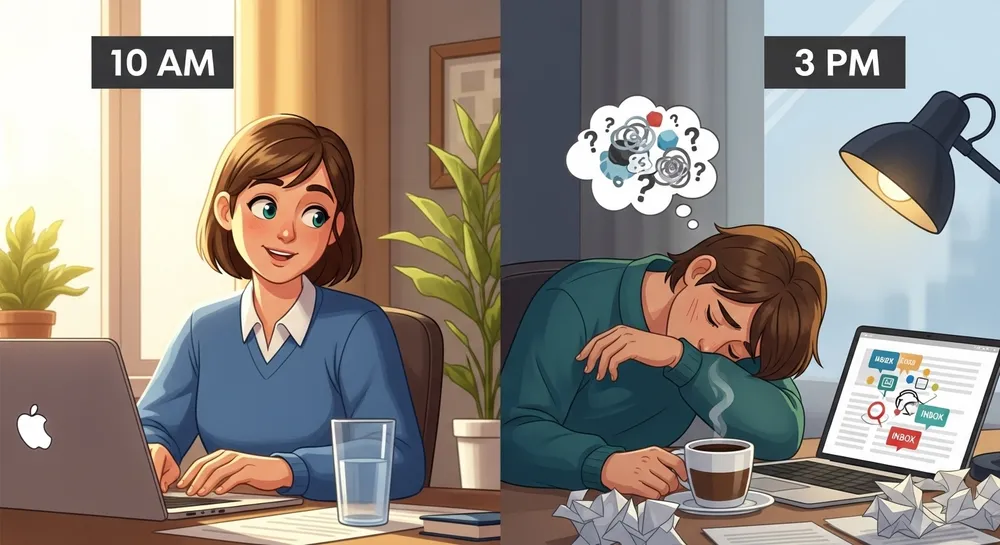
It’s 3 PM. You get back to your desk, open your laptop, and… boom. Your eyelids feel like they weigh twenty pounds. The words on your screen start to blur, and your focus is just gone.
You’re officially in the “dead zone.”
So what do you do? You head straight for the coffee machine. It’s your third cup of the day—maybe your fourth. You drink it hoping for a miracle, but thirty minutes later, you’re just as tired, only now you’re “tired-wired.” Your heart is racing, but your brain is still trapped in thick brain fog.
You’re physically there, but mentally? You’re offline.
If you’re a parent, a freelancer, or anyone trying to stay productive, this isn’t just annoying—it’s a massive drain on your life.
The Energy Myth We’ve All Been Sold
If you search “tired after lunch” online, you’ll get the same tired advice: “It’s your blood sugar,” “It’s the carbs,” “Your body is stealing blood from your brain to digest.”
Sounds logical, right? You eat heavy, you feel heavy. That’s the energy myth we’ve all been sold.
And it’s why millions of people cut out carbs or try “sad salads” for lunch, only to find they still crash at 3:00 PM.
While blood sugar regulation matters, it’s not the main reason you’re struggling. The real culprit is written in your DNA.
The Science Behind Your Afternoon Slump
What’s happening to you between 2:00 and 4:00 PM is pure biology. Think of your body as a smart home with an automated lighting system.
In the morning, your cortisol—your “get up and go” hormone—peaks to wake you up. But about seven to eight hours later, your cortisol levels afternoon naturally dip. It’s not a glitch; it’s a feature.
Adenosine: The “Biological Dust”
But there’s a second player in this game: adenosine. Think of adenosine as “biological dust” that builds up on the floor of your brain every minute you’re awake.
The longer you’re awake, the more dust accumulates, creating “sleep pressure”. By mid-afternoon, that dust layer is thick enough to slow your system down.
Combine that with your ultradian rhythms—natural 90-minute energy waves—and you hit what scientists call the “circadian trough.” It’s the perfect biological storm: low cortisol, high adenosine, and a natural dip in your energy wave.
It happens whether you eat a burger or a bowl of spinach.
According to research from the National Institutes of Health (NIH), this phenomenon is part of our internal biological clock and occurs across all cultures and populations, regardless of diet.
3 Simple Hacks to Beat the Afternoon Crash
So, are we just victims of our biology? Not at all. You just need to stop fighting your body and start working with it.
Here are three science-backed energy tips you can start using tomorrow.
1. The 90-Minute Caffeine Rule
If you’re drinking coffee the second your feet hit the floor at 7:00 AM, you’re setting yourself up for a crash. Caffeine doesn’t actually “get rid of” that adenosine dust—it just puts a rug over it.
If you cover it up too early, the dust keeps building up underneath. When the caffeine wears off around lunchtime, you get hit by a massive wave of tiredness all at once.
The fix? Wait 90 to 120 minutes after waking up before having your first cup. This allows your body to clear out the overnight adenosine naturally.
This one shift is a total game-changer for your afternoon focus.
2. The Circadian Reset
When you feel those low energy symptoms kicking in, your instinct is to curl up in your chair. Do the opposite. Get outside for a ten-minute walk.
It’s not about the workout—it’s about the light. Even on a cloudy day, natural light hits your eyes and sends a “daytime” signal to your brain’s master clock.
It triggers a small hit of cortisol and helps your body process that post-lunch glucose. It’s the simplest, cheapest way to clear the fog.
3. The Neural Reboot (NSDR)
If your brain is completely fried, don’t try to power through. Try NSDR, or “Non-Sleep Deep Rest.”
This is a pro-level biohacking tool. It’s not a nap—naps can leave you feeling groggy and disoriented. Instead, take ten minutes, close your eyes, and follow a guided breathing track or just sit in total stillness.
It lowers your nervous system’s “rev count” and clears that adenosine pressure without the “sleep hangover.” Ten minutes of NSDR can feel like an hour of sleep for your brain.
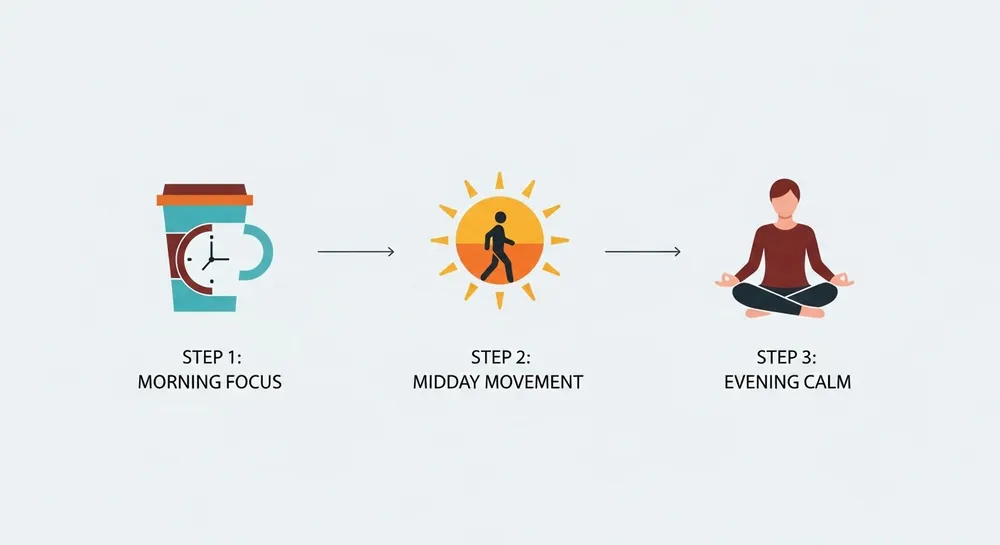
Let’s recap your new anti-crash protocol:
- In the morning: delay your caffeine for two hours
- After lunch: get ten minutes of natural light and movement
- If the afternoon slump hits hard: take a ten-minute “Neural Reboot” instead of reaching for a fourth espresso
You’re not fighting your biology anymore—you’re optimizing it.
For some people, adding natural cognitive support like Mind Lab Pro can provide an extra layer of focus and mental clarity during those challenging hours, without the side effects of stimulants.
Want the Complete Protocol?
Beating the afternoon crash is about understanding the mechanics of your own body. Try this for the next three days and you’ll feel the difference in your clarity and your mood.
If you want to go deeper and get a day-by-day plan to eliminate post-lunch fatigue for good, we created “No More Sleepy After Lunch”—a complete ebook with advanced protocols, daily trackers, and scientifically tested strategies.
It’s designed for people who want real results, not just theory. Get the complete guide here.
FAQ: Common Questions About Afternoon Slump
Why do I feel tired after lunch even when I eat light? Post-lunch fatigue is primarily linked to circadian rhythms and adenosine buildup, not just food. Even with a light meal, your body goes through a natural dip in cortisol between 2:00 and 4:00 PM.
Does coffee after lunch make the afternoon crash worse? If you drink coffee right after waking up, yes. Caffeine masks the adenosine accumulated overnight. When the effect wears off, you feel even more tired. Delaying your first coffee by 90-120 minutes can make a huge difference.
What is NSDR and how do I practice it? NSDR (Non-Sleep Deep Rest) is a deep relaxation technique that doesn’t require sleep. You can follow guided sessions on YouTube or simply sit quietly for 10 minutes with your eyes closed, focusing on your breath.
How long should my afternoon walk be? Just 10 minutes outdoors is enough. The goal isn’t intense exercise, but exposure to natural light, which helps reset your circadian clock and stimulate a mild cortisol increase.
Do carbs at lunch really cause the energy crash? Refined carbs can affect blood sugar, but they’re not the main cause of the afternoon slump. The phenomenon is biological and happens regardless of diet. Managing blood sugar can help, but it won’t eliminate the problem on its own.
Now we want to hear from you: What’s your go-to move when you feel tired at 3:00 PM? Do you reach for sugar, coffee, or do you just power through? Let us know in the comments.
If you found this helpful, download the complete guide and start taking back control of your days.
Disclaimer
Before making significant changes to your diet, routine, or lifestyle, always consult a doctor. This article may contain affiliate links to products we believe may be helpful: if you purchase through these links, we may receive a commission at no additional cost to you. The information in this article is provided for educational and informational purposes only. It does not substitute in any way for the advice of a physician or qualified healthcare professional.