30-Minute Functional Training Workouts You Can Do at Home (No Gym Needed)

Did you know nearly 80% of adults in the United States don’t get enough exercise? Functional training workouts can change that. They prepare your body for daily tasks and boost strength and mobility.
We think staying fit doesn’t need a gym membership. That’s why we’re sharing 30-minute functional fitness workouts you can do at home. These exercises are like everyday movements. They help you get stronger, balance better, and move more freely.
Key Takeaways
- Improve overall strength and mobility with functional strength training.
- No special equipment is needed for these effective workouts.
- Functional exercises can be done in just 30 minutes a day.
- Enhance your daily life with practical, functional fitness workouts.
- Stay fit and healthy without a gym membership.
What Is Functional Training and Why It Matters?
Functional training is a fitness approach that gets us ready for daily life. It focuses on exercises that make everyday activities easier and more efficient.
Definition of Functional Training
Functional training uses exercises that work many muscles at once. It aims to boost strength, balance, and coordination by mimicking daily movements. Unlike traditional workouts, it engages our bodies in a more complete way. This helps us with tasks like lifting, bending, and reaching.
Benefits for Everyday Life
The perks of functional training go beyond the gym, affecting our daily lives positively. It improves our functional movement patterns, lowering injury risks and boosting physical fitness. This training helps us:
- Do daily tasks more easily and efficiently
- Improve balance and lower fall risks
- Boost strength and coordination
So, functional training makes daily activities less hard, enhancing our life quality.
How It Enhances Performance
Functional training gets our bodies ready for daily needs and boosts physical performance. It focuses on real-life movements, enhancing our ability to perform better. Whether in sports, fun activities, or playing with kids, the functional training benefits include better agility, quicker reactions, and more endurance.
Adding functional training to our fitness routine can greatly improve our fitness and well-being. It’s a smart and effective way to build a stronger, more resilient body for today’s demands.
Essential Equipment for Home Workouts

Functional training can be done with little equipment. But, the right tools can make your workout better. Starting with bodyweight exercises is great. Adding some key equipment can make your functional workout routines more interesting and challenging.
Bodyweight Exercises
Functional training is amazing because you can do it with just your body. Push-ups, squats, and lunges are great for getting stronger and improving coordination. You can adjust these exercises to fit your fitness level, making them easier or harder as you like.
- Push-ups: Works your chest, shoulders, and triceps.
- Squats: Targets your legs and glutes.
- Lunges: Strengthens your legs and improves balance.
Recommended Equipment
While bodyweight exercises are effective, some equipment can make your functional training gym at home even better. Here are some top picks:
- Dumbbells: Versatile and effective for strength training.
- Resistance Bands: Great for adding resistance to your movements.
- Kettlebells: Excellent for dynamic movements and strength training.
- Exercise Ball: Useful for core strengthening and balance exercises.
Setting Up Your Home Gym
Setting up a functional training gym at home is easy and doesn’t need a lot of space or money. Here are some tips:
- Start with the basics: Begin with bodyweight exercises and gradually add equipment as you become more comfortable.
- Use multi-functional equipment: Choose equipment that can be used for a variety of exercises.
- Consider your space: Make sure you have enough room to move around comfortably.
For more ideas on setting up your home gym and to explore various functional training equipment, check out our related articles on home workout setups and functional training tips.
Sample 30-Minute Functional Training Workouts
We offer 30-minute functional training workouts for all fitness levels. These are efficient, effective, and fit your busy schedule.
Beginner Workout Plan
Beginners should start with bodyweight exercises. A 30-minute workout might include:
- 5 minutes of light cardio (jogging in place, jumping jacks)
- 10 bodyweight squats
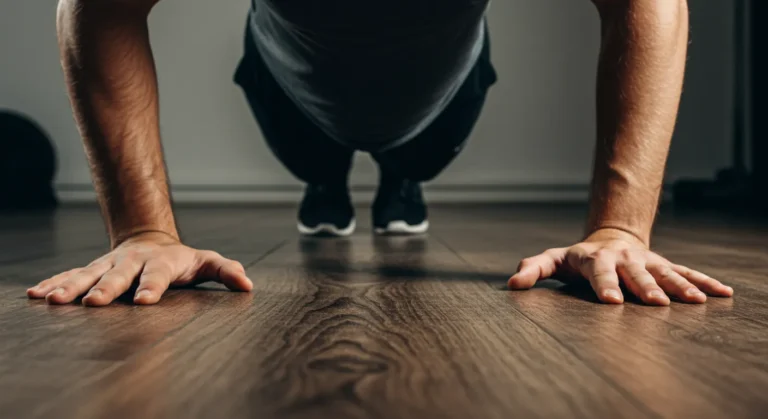
- 10 push-ups (or modified on knees)
- 10 lunges (5 per leg)
- 10 planks (hold for 30 seconds)
- 5 minutes of stretching
Repeat the circuit twice for a total of 30 minutes.
Intermediate Workout Plan
Intermediate folks can add resistance bands or light dumbbells. A sample workout includes:
- 5 minutes of dynamic warm-up (arm circles, leg swings)
- 12 squats with dumbbells
- 12 push-ups with hands shoulder-width apart
- 12 lunges (6 per leg) with dumbbells
- 12 deadlifts using dumbbells
- 5 minutes of cool-down stretching
Complete the circuit three times for a comprehensive 30-minute workout.
Advanced Workout Plan
Advanced individuals can try more complex exercises. A sample workout might include:
- 5 minutes of high-intensity warm-up (burpees, jump squats)
- 15 squat jumps
- 15 push-ups with claps
- 15 lunges (7-8 per leg) with jumps
- 15 mountain climbers
- 5 minutes of static stretching
| Fitness Level | Workout Duration | Exercises | Circuits |
|---|---|---|---|
| Beginner | 30 minutes | Bodyweight squats, push-ups, lunges, planks | 2 |
| Intermediate | 30 minutes | Squats with dumbbells, push-ups, lunges, deadlifts | 3 |
| Advanced | 30 minutes | Squat jumps, push-ups with claps, lunges with jumps, mountain climbers | 4 |
Key Exercises for Functional Training

Choosing the right exercises is key to successful functional training. Focus on functional exercises that mimic daily activities. This improves your strength, balance, and flexibility.
Core Strengthening Moves
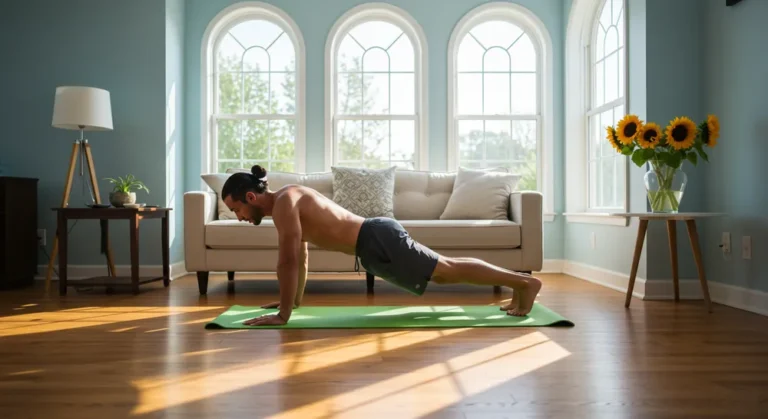
A strong core is vital for functional training. Planks and Russian twists are great for stabilizing your body. To do a plank, start in a push-up position with hands shoulder-width apart. Hold your body straight for as long as you can.
Compound Movements
Compound movements like squats, deadlifts, and lunges are essential. They work multiple joints and muscle groups. This improves your functional movement patterns and fitness.
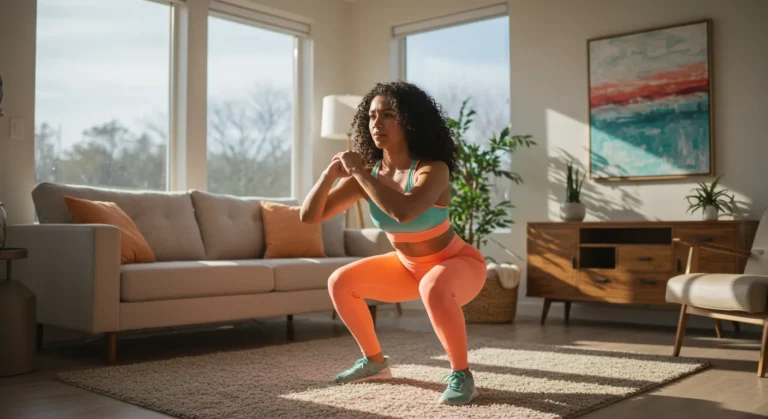
- Squats: Stand with feet shoulder-width apart, then bend knees and lower body until thighs are parallel to the ground.
- Deadlifts: Stand with feet shoulder-width apart, bend down, and lift a weight up to hip level, squeezing glutes and pushing hips back.
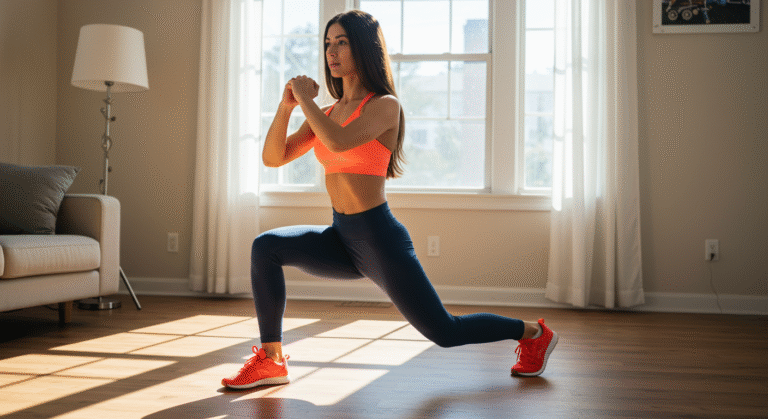
- Lunges: Stand with feet together, take a large step forward with one foot, and lower body until back knee almost touches the ground.
Balance and Stability Exercises
Balance and stability exercises are crucial for overall fitness. Single-leg squats, balance boards, and BOSU ball training improve balance and stability. This reduces injury risk in daily activities.
To do a single-leg squat, stand on one leg, keeping the other foot lifted. Slowly lower your body down, keeping your back straight. Then return to standing.
Safety Tips and Best Practices for Home Workouts
Working out at home is more than saving time. It’s about taking control of your safety and fitness. Doing things right can greatly impact your journey to better health.
Warm-up and Cool-down Routines
Starting with a warm-up is key. It gets your muscles and heart ready for exercise, lowering injury risk. A good warm-up includes light cardio and stretching.
For example, jog in place or do jumping jacks for 5-10 minutes. Then, do dynamic stretches like leg swings and arm circles.
Cooling down is just as important. It helps your body relax after exercise, easing soreness and improving flexibility. Include static stretches for the muscles you used during your workout.
Listening to Your Body
Listening to your body is crucial for safe workouts. If you’re tired or in pain, stop and rest. Ignoring your body can lead to injuries that slow your progress.
Know the difference between normal soreness and pain. Some soreness is okay, especially when starting new exercises. But sharp or ongoing pain means you need to stop.
Common Mistakes to Avoid
Avoiding common mistakes makes your workouts safer and more effective. Here are some mistakes to steer clear of:
| Mistake | Consequence | Correction |
|---|---|---|
| Skipping warm-up/cool-down | Increased risk of injury, muscle soreness | Include a 5-10 minute warm-up and cool-down in your routine |
| Poor form | Injury, ineffective workout | Focus on proper form, use mirrors or record yourself |
| Overexertion | Burnout, injury | Listen to your body, pace yourself |
By avoiding these mistakes, you can create a safe and effective workout space at home.
Join the Community: More Resources and Support
Keep going on your functional training path. Connect with others who have the same goals. Online communities and resources can give you the push you need.
Online Classes and Communities
Look into online classes and groups focused on functional training. Places like a functional training gym offer lots of knowledge and motivation. They help you reach your fitness targets.
Related Articles to Explore
Learn more about functional training gear and how to use it. Our articles have tips and advice for better workouts.
Products to Enhance Your Workouts
Get the best out of your training with the right equipment. Check out products that support your fitness goals.
Disclaimer: The information provided is for educational purposes only, not a substitute for professional medical advice. Always consult a healthcare professional.